
Oval Cut Diamonds Cons and Pros
Public Group
Public Group
Active 2 days ago
The elegance of the matching rings diamond’s sparkle makes it stand out. It is this... View more
Public Group
Organizer:
- Organized by
-
-

Group Description
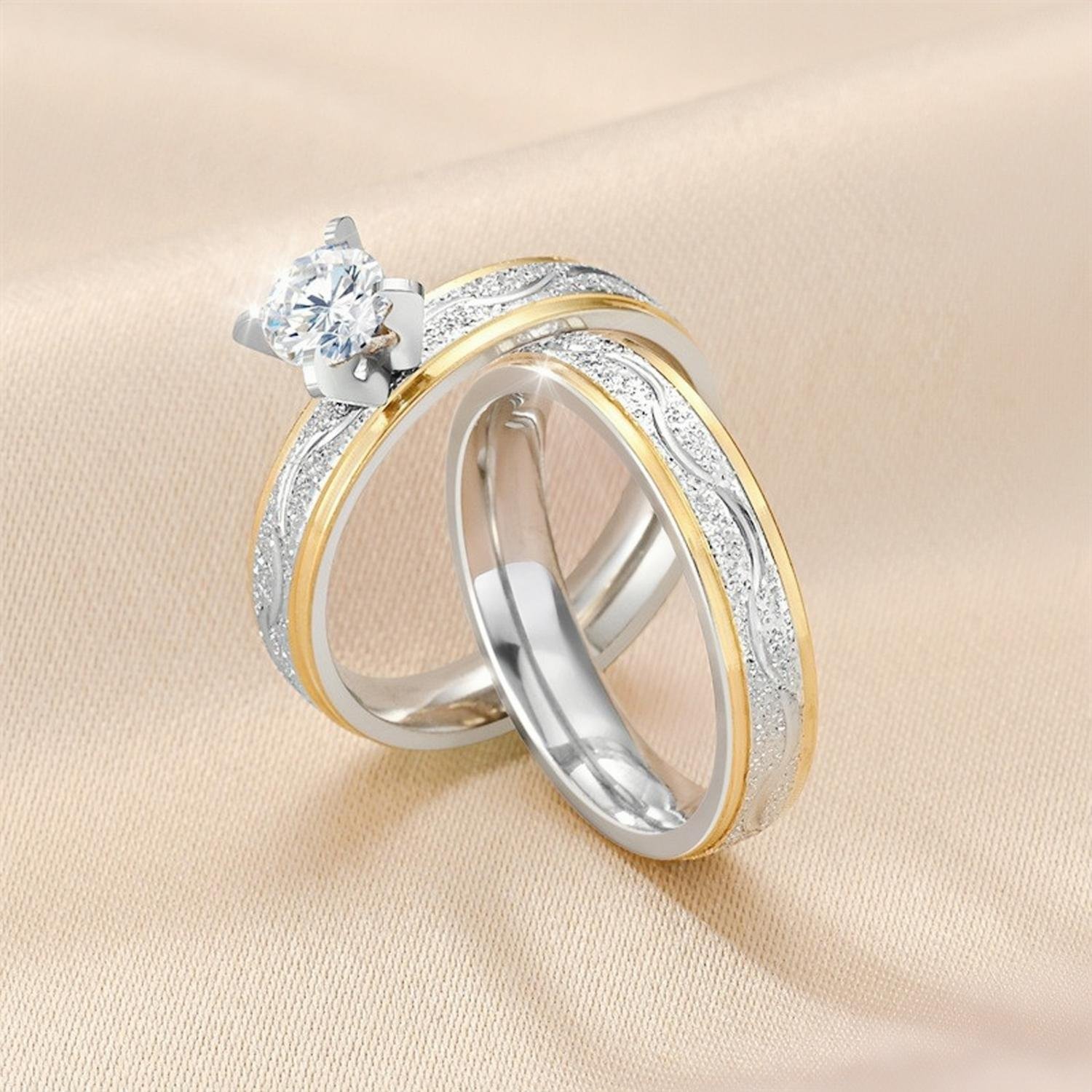
The elegance of the matching rings diamond’s sparkle makes it stand out. It is this ineffable characteristic that attracts people to diamonds with varying clarity and color.
The oval cut couples jewelry diamonds have a symmetrical shape and are filled with brilliance.
What exactly should be considered before purchasing an oval-cut diamond to embellish your engagement or anniversary ring with? This guide will explore the pros, cons and basics of oval diamonds so that you can choose a diamond you’ll love forever.
What is the Oval Cut couple necklaces?
To begin with, we should define an oval cut. It is important to understand some terms that are commonly used when discussing diamond cut:
Round brilliant – The most sought-after cut, this round brilliant features 58 facets to allow the diamonds to sparkle. This cut is likely to be one of the most costly.
Single cut is a simpler way to create a diamond with 18 facets.
Fancy cut: A general term for all cuts of round diamonds that are not round brilliants or single-cut round diamonds. Fancy cut diamonds are oval cuts, which is because they’re not round brilliants or single cuts. They are also very popular.
Pro: Shape
A diamond with an oval cut has a ovular form, as the name suggests. It looks like a round shape and has a lovely symmetrical look. It is important to note that oval cuts are not all the same.
In order to evaluate oval-cut diamonds, you should consider:
The ratio between the width and length of an oval cut diamond can have a dramatic effect on how it looks. Too short and the oval shape will be lost; too long can make it appear elongated or asymmetrical. Ratios of between 1.25 to 1, and 1.65 to 1, will generally produce the best results.
In geometry class, we learned that ovals always have a larger and smaller side. The length of the diamond can be aligned with your finger if you orient it vertically. This will give you a pleasing, elongating appearance. If you align perpendicularly to your finger (also called East-West), it can produce a striking interruption.
Some oval cut diamonds will have pointed or rounded ends. These cuts, however, should be avoided because they will affect the overall aesthetic and symmetry of a diamond.
Pro: Size
When we speak of diamond size, more than its carat weigh is at play. The size of a diamond is not solely determined by its carat weight.
It is more likely that some diamond cuts are larger than others, despite the fact that they all have the same carat. This is known as the cut’s size when viewed from above.
Compare face-up size comparisons, and oval diamond cuts perform quite well. Face-up, oval cuts are usually bigger than round cuts. Even though oval cuts are impressive, these other fancy shapes will look even larger.
Marquise Cut
Pear Cut
Similarly, diamonds with trillion cuts will also look large. However, oval-cut diamonds’ face-up sizes are considered to be a plus.
Pro: Color
A diamond’s color is graded on an alphabetical basis from D-Z. As you near the end alphabetically, the color of your diamond will appear more brownish.
The cut can’t change the color, but some cuts hide the color better than other.
A diamond cut in an oval shape is more effective at hiding color than some other shapes. However, you should still choose a diamond that has a minimum H grade. You might notice that the oval cut diamond’s ends start to take on a yellowish tone if it is graded lower.
Pro: Included
Inclusions are minor imperfections in diamonds. There is also a scale that rates the clarity of diamonds. The scale goes from the highest rating, flawless, to the lowest, included.
You may save money by opting for a lower-quality stone.
Due to the light interaction of oval cuts, they are very good at hiding inclusions. However, keep in mind that the higher the carat weight is, the greater the likelihood of inclusions being visible.
Pro: Light Interaction
How the diamond will interact with the light should be one of your main considerations when choosing the right cut. It is this interaction that gives diamonds their unique sparkle. There are three key terms when discussing how the light interacts with diamonds:
Brilliance: This is the reflection of light from the diamond. The light is transmitted into the diamond and reflected back in colorless form, but still creates a sparkling effect.
Fire – This is a scattering white light. The light that travels through the stone is colorless. However, when it bounces off, it becomes colored, similar to a rainbow.
Scintillation refers to how much sparkle is released by a diamond. Poorly cut stones or those with imperfections can cause the light to be reflected less, resulting in poor scintillation.
Why is it that some light comes back as colorless whereas other light has the colors of a Rainbow? You can answer this question by remembering the science lesson on prisms.
To put it plainly, different colours of light move with different speeds. When light enters stone and reflects in a triangle pattern, it refracted and colors separate. The light does not appear colorless when it is reflected straight back into our eye.
Round cut stones have the best brilliance. The quality of different types of oval-cut diamonds will not match that which is found in rounds. Even so, oval cut diamonds will have excellent light interaction.
Be familiar with the differences between cushion vs. oval cut, and pear vs. oval diamond.
Viewing 1 member
- Organizers
-

Viewing 1 member